

Ancient Egypt, the Pharaohs and the Pyramids: A Civilization That Still Fascinates the World
Kazi Abul Monsur#
The people of modern Egypt continue to cherish many beliefs and traditions rooted in their ancient civilization. Among younger Egyptians in particular, the pyramids remain a constant source of fascination and national pride.
One of the central beliefs of the ancient Egyptians was that death was not the end of life but rather the beginning of another existence—the afterlife. They believed that while the physical body died, the soul lived on. To preserve the soul’s connection to the body, they developed the sophisticated practice of mummification, protecting the body from decay for eternity.
However, preserving the body alone was not considered enough. Ancient Egyptians believed that the soul also required a secure and permanent dwelling after death. This belief gave rise to the construction of the magnificent pyramids. They also believed that the deceased would continue to need food, drink, clothing, and other necessities in the next world. As a result, mummies were buried with food, beverages, luxurious garments, perfumes, jewelry, furniture, and many personal possessions. When a powerful king—or Pharaoh—died, his tomb was often filled with gold, precious stones, elaborate furniture, and statues representing servants who were believed to accompany him in the afterlife.
Pharaoh: Not a Name, but a Royal Title
Many people mistakenly believe that “Pharaoh” was the name of a particular ruler. In reality, Pharaoh was the official royal title given to the kings of ancient Egypt. The word originally meant “Great House” or “Royal Palace,” referring to the king’s authority and residence. Every ruler who governed ancient Egypt was known as a Pharaoh.
In the Holy Qur’an, the Pharaoh mentioned during the time of Prophet Moses (Musa, peace be upon him) is generally believed by many historians to have been either Ramses II or his successor, Merneptah, although this identification remains a subject of scholarly debate.
Popular folklore sometimes claims that the Pharaohs lived for 400 or 500 years. Modern historical and scientific research, however, shows that their life expectancy was generally comparable to that of other people of their era. Some exceptional rulers, such as Ramses II, lived to around 90 years of age—a remarkably long lifespan for the ancient world.
The Pyramids: An Extraordinary Triumph of Stone and Mathematics
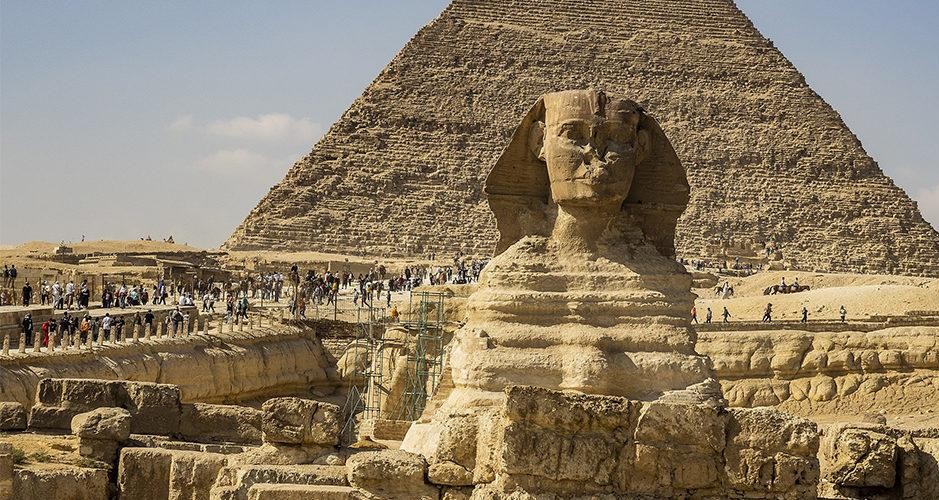
The Egyptian pyramids were primarily built as monumental tombs for Pharaohs and members of the royal elite. More than one hundred pyramids have been discovered across Egypt, but the most famous is the Great Pyramid of Giza, constructed as the burial monument of Pharaoh Khufu (Cheops).
Some remarkable facts about the Great Pyramid include:
Height and Scale: When completed, the pyramid stood approximately 481 feet (146.6 meters) tall. Due to erosion and the loss of its outer casing stones, it now measures about 455 feet (138.8 meters). It occupies roughly 13 acres of land.
Massive Stone Blocks: Around 2.3 million stone blocks were used in its construction. Some of the granite blocks weigh between 25 and 70 tons each.
Engineering Precision: Built without modern cranes, steel reinforcement, or cement, the pyramid was constructed using extraordinary geometric accuracy. The joints between many stones are so precise that even a thin blade can scarcely fit between them.
Astronomical Alignment: The four sides of the Great Pyramid are aligned almost perfectly with the cardinal directions—north, south, east, and west—a feat that continues to astonish engineers and scientists.
Who Built the Pyramids? Earlier theories suggested that slaves built the pyramids under brutal conditions. However, archaeological discoveries indicate that they were constructed by tens of thousands of highly skilled, paid workers who took great pride in building these monuments for their king.
The enormous stone blocks were transported over long distances, often by boat along the Nile River and then hauled across the desert using wooden sledges, rollers, ropes, and carefully engineered ramps. Even today, the engineering techniques behind their construction continue to inspire debate and admiration.
Thousands of years later, the pyramids remain among humanity’s greatest architectural achievements, while the ancient Egyptians’ beliefs about the afterlife continue to captivate people around the globe.
Are Pyramids Found Only in Egypt?
No. Although Egypt is home to the world’s most famous pyramids, pyramid-shaped monuments exist in many other countries. In fact, some nations have even more pyramids than Egypt.
Sudan – The Country with the Most Pyramids
Sudan, Egypt’s southern neighbor, contains more pyramids than Egypt. The rulers of the ancient Kingdom of Kush built more than 220 pyramids, mainly at Meroë and Nuri. Although much smaller than the Egyptian pyramids, Sudanese pyramids are steeper and possess their own distinctive architectural style.
Mexico
The ancient Maya, Aztec, and earlier civilizations of Mesoamerica constructed numerous pyramids throughout present-day Mexico. Among the most famous are Chichén Itzá and Teotihuacan.
Interestingly, the largest pyramid in the world by volume is not in Egypt but the Great Pyramid of Cholula in Mexico.
Rome, Italy
Rome is home to the Pyramid of Cestius, a remarkably well-preserved Roman pyramid built around 2,000 years ago as a monumental tomb.
China
China’s Shaanxi Province contains numerous ancient imperial burial mounds, commonly referred to as the Chinese Pyramids. Built primarily from compacted earth, these structures resemble hills or small mountains from a distance.
Other Countries
Pyramid-like monuments can also be found in Peru, Indonesia, Cambodia, and Iraq, where ancient ziggurats served religious and ceremonial purposes.
Nevertheless, because of their extraordinary age, unmatched geometric precision, association with mummification, and enduring mysteries, the Egyptian pyramids remain the world’s most iconic.
How Many Pharaohs Ruled Ancient Egypt?
Determining the exact number of Pharaohs is challenging because Egypt’s history spans nearly 3,000 years, and many rulers remain poorly documented or disputed.
Most Egyptologists estimate that between 170 and 300 Pharaohs ruled ancient Egypt.
Some key facts include:
Historically Confirmed Rulers: Around 170 Pharaohs are supported by strong historical evidence. Approximately 163 were men, while at least seven women ruled as Pharaohs, including Hatshepsut and Cleopatra VII.
Dynasties: From the first king, Narmer (also known as Menes), to the last Pharaoh, Cleopatra VII, Egypt was ruled by approximately 30 major dynasties over more than 3,000 years.
Why the Numbers Differ: During Egypt’s Intermediate Periods, multiple rulers often governed different regions simultaneously, each claiming the title of Pharaoh. Some are known only from fragmentary records with little archaeological evidence. Including these disputed rulers can raise the estimated total to well over 300.
Why Are Egypt’s Pyramids So Popular?
In recent years, Egypt has experienced a record-breaking surge in international tourism. In 2025, the country welcomed approximately 19 million international visitors, the highest figure in its history. During the early months of 2026, tourist arrivals increased by a further 7%, reflecting Egypt’s growing appeal as one of the world’s leading cultural tourism destinations.
The Pyramids: Egypt’s Biggest Tourist Attraction
For most international visitors, the Pyramids of Giza remain the primary reason for visiting Egypt. It is estimated that more than 14 million people visit the Giza Pyramid Complex every year. These visitors include millions of international tourists, as well as Egyptian families, students, researchers, and history enthusiasts eager to experience one of the world’s greatest archaeological sites.
Why Visitor Numbers Continue to Rise
Several major developments have significantly boosted the popularity of the pyramids in recent years.
On 1 November 2025, Egypt officially opened the Grand Egyptian Museum (GEM) adjacent to the Giza Plateau. Widely regarded as one of the largest archaeological museums in the world, the museum houses an unparalleled collection of ancient Egyptian treasures, including the complete treasures of Tutankhamun displayed together for the first time. Since its opening, visitor numbers to the Giza area have increased substantially.
In addition, the Egyptian government has undertaken extensive modernization and conservation projects throughout the pyramid complex. Improved transportation, upgraded visitor facilities, enhanced security, environmentally friendly transportation within the archaeological zone, and comprehensive restoration efforts have made the site cleaner, more accessible, and more enjoyable for visitors from around the world.
Today, the Pyramids of Giza are not only among humanity’s greatest engineering achievements but also one of the world’s most visited cultural landmarks, attracting millions of people every year who come to witness the enduring legacy of one of history’s greatest civilizations.